
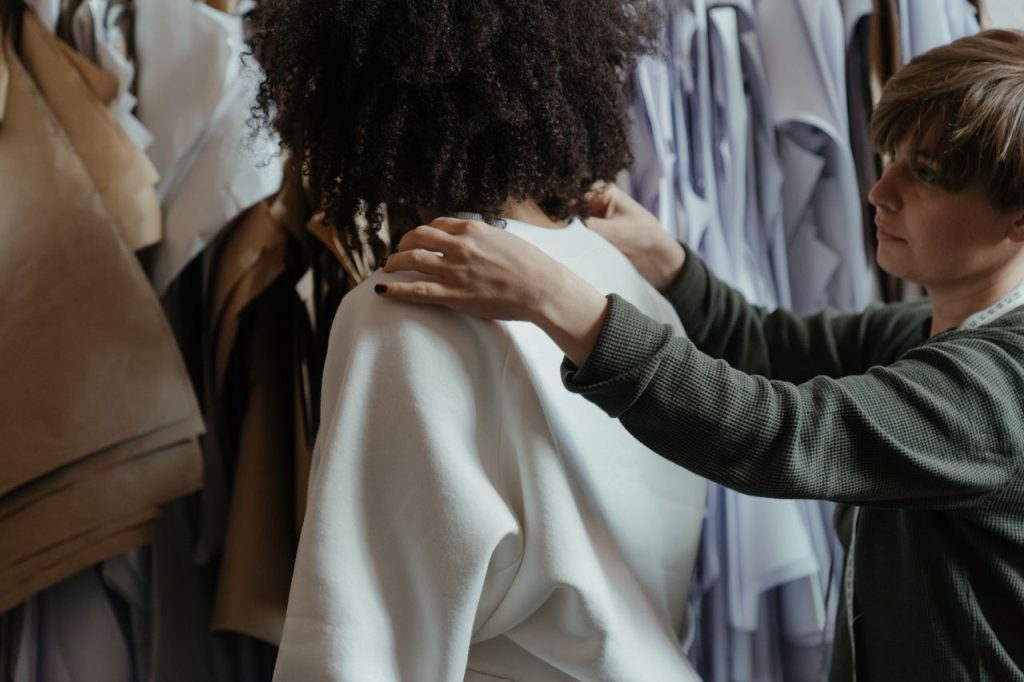
One of the most exciting moments in launching a fashion brand is seeing your design transformed from a sketch into a real garment. This stage is known as garment sampling, and it’s one of the most important steps in the entire product development process.
Many new designers believe that once a sample is made, production can begin immediately. In reality, garment sampling is a detailed process of testing, refining and perfecting every aspect of your design before committing to manufacturing.
At KJ Production House, we often tell our clients that the quality of your sampling process will determine the quality of your final collection. Investing time in sampling helps eliminate costly production mistakes and ensures your garments meet both your expectations and those of your future customers.
What is garment sampling?
Garment sampling is the process of creating a physical prototype of your design before bulk production begins.
It allows designers, manufacturers and pattern makers to evaluate every aspect of the garment, including:
- Overall design
- Fit
- Sizing
- Construction
- Fabric performance
- Comfort
- Functionality
- Manufacturing feasibility
Think of a sample as the blueprint for your entire production run. Once approved, every garment manufactured should replicate the approved sample.
Why is garment sampling so important?
Sampling isn’t simply about checking whether the garment looks good. It’s about ensuring your design performs exactly as intended. During the sampling process you’ll discover things that simply can’t be seen on paper.
For example:
- Does the neckline sit correctly?
- Are the armholes comfortable?
- Is the garment too tight across the shoulders?
- Does the fabric stretch enough?
- Is the hem balanced?
- Does the garment move well?
- Are the pockets functional?
- Does the zipper sit flat?
These small details often determine whether customers fall in love with your product, or never buy it again.
The first sample
Receiving your first garment sample is always exciting. However, it’s important to remember that the first sample is rarely perfect. Its purpose is to evaluate the overall concept rather than produce a finished garment. The first sample is used to assess:
- Overall garment shape
- Silhouette
- Proportions
- Pattern accuracy
- Construction techniques
- Fabric suitability
- Initial fit
Most fashion brands require two, three or even four rounds of sampling before a garment is approved. This is completely normal.
At KJ Production House, we work closely with our clients throughout this process, documenting every change and communicating directly with the production team to ensure each revision moves closer to the final approved design.
The garment fitting process
Once the first sample has been completed, it’s time for fittings. This is where the garment is actually worn and evaluated. During fittings we assess:
- Fit across the bust, waist and hips
- Garment length
- Sleeve length
- Neckline position
- Ease of movement
- Comfort
- Balance
- Overall appearance
At KJ Production House, Karen Jakab always encourages clients to wear their sample, not just try it on briefly. Wear it around the house. Walk in it. Sit down. Drive your car. Exercise if it’s activewear. Wash the garment. Dry it. Wear it again. Only by living in the garment will you discover how it truly performs.
Many issues only become obvious after wearing a garment for several hours.
Common adjustments made during sampling
Almost every sample requires modifications before production. Typical adjustments include:
- Length changes
- Sleeve alterations
- Waist adjustments
- Neckline refinements
- Pocket positioning
- Strap adjustments
- Hem corrections
- Fabric substitutions
- Trim changes
- Elastic tension
- Label placement
Sometimes even moving a seam by just a few millimetres can completely change the way a garment fits.
Fabric testing is essential
Choosing beautiful fabric is only the beginning. During sampling, fabrics need to be thoroughly tested for performance. Important characteristics include:
Stretch
Does the fabric stretch enough?
Does it recover properly?
Will it become loose after wearing?
Shrinkage
Does the fabric shrink after washing?
How much?
Can this be accounted for during pattern development?
Durability
Will the fabric withstand repeated washing?
Will it pill?
Will it lose its shape?
Transparency
Does the fabric become see-through when stretched?
This is especially important for activewear and swimwear.
Drape
Does the fabric fall naturally?
Does it create the silhouette the designer intended?
One interesting fact many new designers don’t realise is that the same fabric in different colours can behave differently. Dark dyes, light dyes and printing processes can all affect stretch, shrinkage and overall garment fit. This is why experienced product developers test every fabric thoroughly before production begins.
Why multiple samples are completely normal
Many first-time fashion brands worry when they hear they need another sample. In reality, multiple rounds of sampling are standard practice throughout the fashion industry. Every revision improves:
- Fit consistency
- Garment balance
- Construction quality
- Wearability
- Comfort
- Manufacturing efficiency
Skipping this process to save time and money often leads to expensive mistakes during production. Correcting problems after hundreds of garments have already been manufactured is far more costly than refining the sample first.
Technical specifications matter
One area many new brands overlook is technical documentation. An approved sample alone isn’t enough for a factory. Detailed production documentation is equally important. At KJ Production House, we prepare comprehensive production packs that include:
- Finished garment measurements
- Construction methods
- Stitching details
- Fabric specifications
- Trim specifications
- Labels
- Packaging requirements
- Colour references
- Grading information
- Quality standards
These documents become the production manual for the factory and dramatically reduce the risk of manufacturing errors.
Final approval before production
Once every revision has been completed, the garment enters the approval stage. Before production begins, we ensure:
- Measurements are confirmed
- Fit is approved
- Construction is finalised
- Fabrics are approved
- Trims are approved
- Colourways are confirmed
- Technical specifications are complete
- Production documentation is finalised
Only when every detail has been approved should bulk manufacturing commence. Taking the time to perfect this stage provides confidence that every garment leaving the factory will meet the required standard.
Why work with KJ Production House?
Developing a garment involves far more than simply creating a sample. With decades of experience in fashion production, Karen Jakab understands the countless details that influence the success of a garment, from pattern development and fabric selection through to production-ready technical documentation.
At KJ Production House, we work alongside emerging designers, established fashion brands and businesses looking to develop new collections. Our goal is to guide clients through every stage of the garment development process, helping them avoid costly mistakes while creating garments that are commercially successful, beautifully made and ready for production.
Whether you’re developing activewear, swimwear, uniforms, fashion apparel or children’s clothing, our experience ensures every garment is production-ready before manufacturing begins.
Final thoughts
Garment sampling is much more than creating a prototype, it’s the foundation of a successful fashion collection. Every adjustment, fitting, fabric test and revision contributes to producing a garment that not only looks exceptional but performs beautifully and delights your customers. Investing time in the sampling process will save you time, money and frustration during manufacturing while giving you confidence that your collection is ready for market.
If you’re ready to turn your ideas into professionally developed garments, KJ Production House is here to help guide you through every step of the journey, from concept to production.