
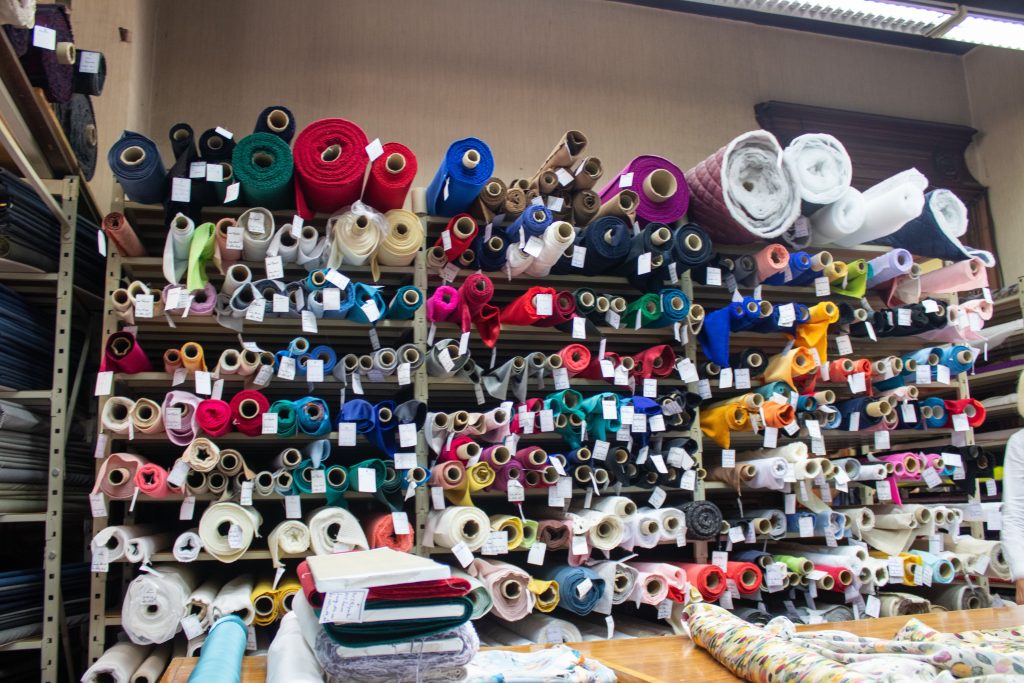
Why fabric selection is one of the most important decisions in fashion product development.
You’ve got an idea for a clothing collection. You’ve thought about the designs, the colours, the styles and how you want your garments to look. But have you thought carefully about the fabric?
For many people starting a fashion label, fabric selection can seem like a relatively straightforward decision. Find something that looks good, feels nice and comes in the right colour.
Unfortunately, Karen Jakab says that “there’s a lot more to it.”
The fabric you choose can fundamentally change how your garment looks, fits, feels, moves and performs.
At KJ Production House, founder Karen Jakab draws on more than 30 years of fashion industry experience to help emerging and established fashion brands navigate the garment development process. And one of the most important conversations during that process is about fabric. Because even the best design can be compromised by choosing the wrong material.
- Start with what the garment needs to do
Before selecting a fabric, it’s important to understand the purpose of the garment.
Is it activewear that needs to stretch and recover?
Is it a structured jacket that needs to hold its shape?
Is it a flowing dress that needs to drape softly?
Is it children’s clothing that needs to withstand frequent washing?
Or is it swimwear that needs to maintain its fit when wet?
Different garments place different demands on their fabrics.
For example, a fabric that works beautifully for a relaxed summer dress may be completely unsuitable for fitted activewear.
The starting point shouldn’t simply be, “What fabric do I like?” It should be, “What does this garment need the fabric to do?”
- Understand how different fabrics behave
Two fabrics can look very similar but behave quite differently once they’re cut, sewn and worn. Some of the characteristics worth understanding include:
Stretch and recovery
Stretch describes how much a fabric can extend. Recovery refers to how well it returns to its original shape. Both are particularly important for fitted garments, activewear, swimwear and other clothing designed for movement. A fabric may stretch easily but have poor recovery, causing the garment to lose its shape over time.
Drape
Drape describes how a fabric falls and hangs. A soft, fluid fabric may create a flowing silhouette, while a stiffer material may produce a more structured shape. Changing the fabric can completely change the appearance of the same design.
Weight and thickness
Fabric weight can influence comfort, opacity, structure and suitability for different seasons. A lightweight fabric isn’t automatically better for summer, just as a heavier fabric isn’t necessarily more durable. The fibre, construction and intended use all matter.
Breathability and comfort
Consider how the fabric feels against the skin and how comfortable it will be in the conditions where the garment is worn. This is particularly important for everyday clothing, children’s garments, activewear and sleepwear.
Shrinkage and dimensional stability
Some fabrics may shrink, stretch or change shape during washing, drying or wear. These characteristics need to be considered before patterns and production specifications are finalised. A fabric that looks perfect when new may behave differently after repeated laundering.
- Fibre content is only part of the story
Cotton, linen, polyester, viscose, nylon, elastane and other fibres all have different characteristics. But knowing the fibre content alone doesn’t tell you everything about a fabric. The way a fabric is knitted or woven, its weight, finishing treatments and construction can have a significant impact on performance.
For example, two fabrics labelled as cotton may feel, stretch, drape and wear very differently. Similarly, two polyester fabrics may be suitable for entirely different garments.
This is why fabric selection should involve more than choosing a fibre name from a supplier’s catalogue. You need to understand the actual fabric you’re planning to use.
- The fabric and the pattern need to work together
One of the most common misunderstandings in garment development is that a pattern can be used with almost any fabric. In reality, the relationship between the pattern and fabric is critical. A pattern developed for a stable woven fabric may not perform as intended when made in a highly stretchable knit. Likewise, a design developed for a lightweight, flowing material may look completely different in a heavier, more structured fabric.
Changing fabrics can affect:
- Garment fit and ease
- Seam construction
- Necklines and armholes
- Hem finishes
- Support and structure
- Overall silhouette
- Comfort and movement
Sometimes a fabric substitution requires only minor adjustments. Other times, the pattern or construction method needs significant redevelopment. Choosing a different fabric isn’t always a simple substitution. It can mean developing a different garment.
- Don’t judge a fabric by its appearance alone
A small fabric swatch can tell you quite a lot, but it won’t necessarily tell you everything. A fabric may feel beautiful in your hand and look perfect in the colour you’ve selected. But how will it behave when made into a complete garment? Will it stretch out of shape? Will it be too transparent? Will it crease excessively? Will it hold the intended silhouette? Will it be comfortable against the skin? And how will it perform after washing?
Depending on the garment and its intended use, appropriate testing may include checking shrinkage, colourfastness, pilling, abrasion resistance, stretch and recovery. The testing required will vary according to the product, fabric and intended market. The more you understand before production, the fewer surprises you’re likely to encounter afterwards.
- Sampling is where fabric selection meets reality
At KJ Production House, garment sampling plays an important role in evaluating both the design and the selected material. It’s one thing to imagine how a fabric will behave. It’s another to see it made into a garment and fitted on a real person. During sampling and fittings, you may discover that:
- The fabric doesn’t drape as expected.
- The garment needs more or less stretch.
- The material is too heavy or too lightweight.
- The fit changes when the garment is worn.
- A different seam or finishing method is required.
- The fabric doesn’t provide the structure the design needs.
These findings are part of the development process. Sometimes the solution is to adjust the pattern or construction. Sometimes it’s to select a different fabric. And sometimes both are required. It’s much better to identify these issues during sampling than after an entire production run has been manufactured.
- Consider the practicalities of sourcing and manufacturing
Even when you’ve found a fabric that performs beautifully, there are other questions to consider. Is it readily available? Can you purchase the quantity you need? Does the supplier have minimum order requirements? Is the fabric available in your preferred colours? Can it be reordered if your collection sells well? Will the same quality and specifications be available for future production runs? What are the lead times?
These are important commercial considerations, particularly for smaller fashion labels.
A fabric might be perfect for your design but difficult to source in commercially practical quantities. Alternatively, a fabric may be available for your first production run but impossible to obtain again when you need to reorder. For a growing fashion business, consistency and continuity of supply can be just as important as the original selection.
- Understand how fabric affects your costs
Fabric is often a significant component of the cost of manufacturing a garment. But the price per metre is only part of the calculation. You also need to consider:
- How much fabric each garment requires
- Fabric width and cutting efficiency
- Pattern placement and potential wastage
- Minimum order quantities
- Freight and delivery costs
- Additional linings, interlinings or trims
- Whether the material requires specialist handling or construction
A less expensive fabric doesn’t always result in a less expensive finished garment. For example, a difficult-to-handle material may increase cutting or sewing time. Similarly, a fabric with poor dimensional stability or inconsistent quality may create additional production problems. The goal should be to select a fabric that meets the garment’s requirements while supporting a commercially realistic manufacturing cost.
- What about sustainable fabrics?
Sustainability is becoming an increasingly important consideration for fashion brands and their customers. However, choosing a fabric described as natural, recycled, organic or sustainable doesn’t automatically tell you everything about its environmental impact. It’s important to look beyond the marketing description.
Consider the fibre source, manufacturing process, durability, care requirements, available certifications and whether the material is appropriate for the intended garment. A fabric that performs poorly or wears out quickly may not be the best choice simply because it carries a sustainability-related claim. If sustainability is part of your brand positioning, make sure your claims can be supported by reliable supplier information and appropriate evidence. A responsible fabric choice should consider both the material and how the finished garment will be used.
- Karen’s advice: Choose the fabric as part of the development process
With more than 30 years in the fashion industry, Karen Jakab understands that fabric selection can have a major impact on the success of a garment. It’s not a decision that should be made in isolation. The design, fabric, pattern, construction method, fit and intended manufacturing process all need to work together.
At KJ Production House, Karen works closely with clients to understand what they’re trying to achieve and helps them navigate the technical decisions involved in turning a concept into a finished garment. That includes discussing suitable materials, understanding how fabrics will behave, developing patterns, reviewing samples and refining garments before production.
The right fabric isn’t necessarily the most expensive, the most fashionable or the one that looks best on a swatch. It’s the one that works for your design, your customer, your manufacturing requirements and your business.
Getting the fabric right can make all the difference A successful clothing collection starts long before garments reach the manufacturing stage. It starts with informed decisions about design, materials, fit, construction and product development.
Choosing the right fabric is one of those decisions. And it’s one that deserves careful consideration. Because a beautiful design made in the wrong fabric can become a disappointing garment. But when the design, fabric and construction work together, the result can be something worth putting your brand name on.
Planning a clothing collection? Let’s get the foundations right.
Whether you’re developing your first fashion label or creating a new range for an established brand, KJ Production House can help you navigate the garment development process.
Contact Karen Jakab to discuss your ideas and learn more about fabric selection, patternmaking, garment sampling and clothing production management.